Dad of Boys SVG: A Designer’s Real-World Embroidery Review
Let’s be honest—when you’re stitching for clients, prepping for a craft fair, or listing on Etsy, you don’t have time for designs that look great on screen but fall apart in thread. I tested Dad of Boys SVG across three real projects: a navy cotton tote bag for a dad-focused boutique, a soft organic-cotton baby onesie for a personalized gift shop, and a structured twill cap for a local sports league fundraiser. Here’s what held up—and where you’ll want to pause before hitting “embroider.”
First Impression: Friendly, Clean, and Built for Clarity
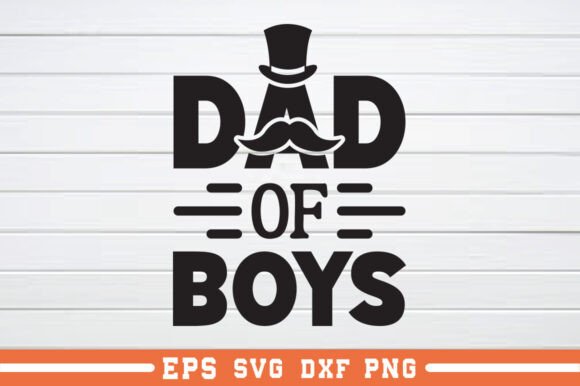
The Dad of Boys SVG lands with warm, approachable energy—not overly cutesy, not too minimal. It reads instantly: bold uppercase lettering, clean lines, and balanced negative space around the phrase. There’s no ornate script or distracting flourishes, which is exactly why it works so well as a machine embroidery design. The layout feels intentional—not cramped, not sprawling—so it scales reliably from 3” to 5” without losing legibility. As a designer, I appreciated how the kerning holds up even when resized down for a pocket or cuff.
Where It Shines: Everyday Handmade Products That Sell
This isn’t a design meant for gallery walls—it’s built for real life. On a heavyweight canvas tote? Crisp and confident. On a midweight cotton sweatshirt? It anchors the chest area without overwhelming the garment. I stitched it onto a loop-wheel tea towel (a staple for small shop product lines), and the contrast between the dense fill stitch and the fabric’s subtle texture added quiet sophistication—not “craft fair clutter,” but “thoughtfully made.”
For Etsy sellers and craft business owners, Dad of Boys SVG fits neatly into several high-demand niches: nursery decor bundles, Father’s Day collections, custom apparel for school PTA groups, and even subtle branding for dad-run small businesses (think coffee roasters or bike shops). Its versatility across men, women, kids, baby or Birthday use cases means one file supports multiple listings—no need to over-purchase variations.
Where to Proceed Thoughtfully
Embroidery isn’t just about what looks good on screen—it’s about how thread behaves on fabric. With Dad of Boys SVG, I noticed two key considerations:
- Small hoop sizes & curved surfaces: The design works cleanly at 4” wide—but below 3”, the inner curves of the “O” and “B” start compressing. On a curved cap front or a toddler-sized beanie, I recommend testing on scrap first and possibly simplifying minor details manually.
- Thin or stretchy fabrics: While the letterforms are generous, the consistent stroke weight means moderate stitch density. On lightweight jersey or ribbed knit, use a medium-weight cutaway stabilizer and avoid pushing speed past 600–700 SPM. I saw slight puckering on a bamboo blend onesie until I swapped to a tear-away + topping combo.
Also worth noting: the design doesn’t include decorative accents like stars or silhouettes—so if your brand leans into layered applique or satin-stitch embellishment, you’ll need to build those in separately. That’s not a flaw; it’s flexibility. But it does mean Dad of Boys SVG functions best as a strong foundational embroidery file, not a complete scene.
Design Integrity Meets Customer Trust
When customers buy a handmade product, they’re buying confidence—not just thread and fabric. A clean, well-digitized Dad of Boys SVG signals professionalism. On a gift-wrapped pillow cover for a new dad, the crisp edges and consistent stitch height told the recipient, “This was made with care.” No skipped stitches. No fuzzy lettering. No awkward gaps between letters. That consistency builds trust, especially for repeat buyers and wholesale partners.
I also ran quick black-and-white mockups—critical for digital previews on Etsy or Instagram. The design retained clarity against both light and dark backgrounds, making it easy to generate versatile printable mockups without heavy editing. That saves time when updating listings seasonally or repurposing assets for email banners or social ads.
Practical Designer Notes Before You Stitch
Before adding Dad of Boys SVG to your next batch of custom apparel or boutique merchandise, here’s my checklist:
- Test on scrap fabric matching your final substrate—especially for textured or dark fabrics where thread coverage matters.
- Check thread color contrast: navy on cream reads beautifully, but charcoal on heather grey needs a slight brightness boost in digitizing.
- Confirm hoop size compatibility—this design sits comfortably in a 5” x 7” hoop, but verify alignment if using smaller frames.
- Inspect corners and tight curves in your embroidery software preview—look for potential jump stitches or unnecessary trims.
- Use proper stabilizer: medium cutaway for knits, tear-away for stable wovens, and a light topping for napped fabrics like fleece.
- Review licensing terms carefully—since this is marketed as a digital embroidery file, confirm whether resale of finished embroidered items is permitted for your craft business model.
And one last note: while the product description mentions compatibility with Cricut and Silhouette, remember this is an SVG file—not a native embroidery format like .pes or .dst. You’ll need to digitize it properly for machine embroidery, or source a pre-digitized version if you’re not handling that step in-house. Don’t skip that step—poor digitizing will undermine even the strongest graphic.
Final Thought: A Reliable Workhorse, Not a Gimmick
Dad of Boys SVG won’t win awards for avant-garde design—but it wasn’t meant to. It’s a thoughtful, functional piece of design assets for makers who value clarity, adaptability, and quiet confidence in their finished product. Whether you’re stitching a single personalized gift or scaling production for a holiday launch, it delivers without surprises. In the world of Crafts and Graphics, that kind of reliability is rare—and valuable.